 CheapTraffic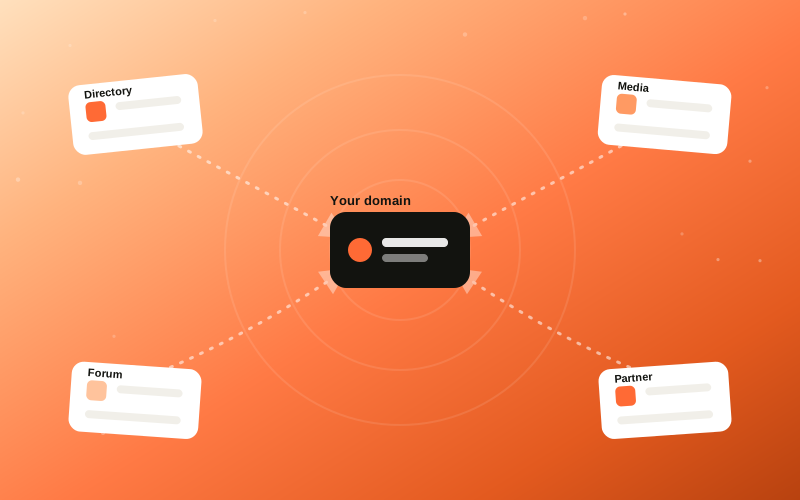
Open any domain in Similarweb, scroll past the headline visits number, and you reach the part that actually tells a story: the source breakdown. One of those sources is referral — and it's one of the most misread rows on the whole page. People either ignore it or treat it as a quality score. It's neither.
This guide explains what referral traffic means inside Similarweb's estimated source mix, where the number comes from, why it's so often confused with direct traffic, and how a referral profile can be planned in a way that looks coherent rather than stitched together.
What referral traffic means in Similarweb
In Similarweb, referral traffic is the share of estimated visits attributed to arrivals from other websites — as opposed to search, social, direct entry or paid channels. It's the model's read on a domain's external footprint: the links, mentions, directory listings, forum posts and partner pages that appear to be sending people its way.
A visible referral presence supports the impression that a site exists in a wider web ecosystem, not just in isolation. It suggests other properties consider it worth linking to or mentioning. That impression is exactly what a partner, an affiliate manager or an investor is scanning for when they open a profile — they're checking whether the traffic story looks like it has more than one leg to stand on.
Referral is one of five categories that usually make up a public source mix, and it only makes sense when read next to the others. If you want the full picture of how the categories interact, we covered it in Similarweb source mix explained.
Where the referral number comes from
It helps to remember what Similarweb actually is: an estimate, not your analytics account. It blends signals from multiple sources into a modelled figure, then splits that figure across channels. The referral row is the portion of the estimate that the model associates with visits arriving from another site rather than from a search engine, a social platform, or no identifiable source at all.
Because it's modelled, the referral percentage you see is a directional read, not a precise measurement. Two things follow from that. First, the number won't match the referral figure in your own Google Analytics — the two are built from different data answering different questions. Second, referral share shifts on Similarweb's update cadence, not in real time, so a change in referring activity takes a cycle or two to settle in the public view. If you've ever wondered why numbers lag, the same logic applies as in how Similarweb estimates website traffic.
Referral vs direct: the common mix-up
This is where most misreadings happen. Referral and direct sit next to each other in the breakdown, and the line between them is blurrier than it looks.
Direct traffic is associated with visits that carry no identifiable referring source — a typed URL, a bookmark, or a channel that strips referral data. Referral traffic is associated with visits that appear to arrive through another website. The catch: some visits that should be counted as referral get bucketed as direct simply because the referral data didn't pass through cleanly. App clicks, some redirects, and privacy-stripped links all leak into direct.
So a profile that's heavy on direct and light on referral isn't automatically suspicious — some of that direct may really be uncredited referral. But the reverse question still matters: if a site shows a big total sitting almost entirely on one category with nothing else to support it, that's the pattern an experienced reviewer notices first.
One category carries almost the entire total, with little referral or organic presence to back it up.
Referral sits alongside direct, organic and social — no single source props up the whole number.
What a believable referral profile looks like
The key word for referral traffic is plausible. A referral presence reads well when the sources make sense for the site's niche: relevant directories, sector media, communities and partners a real audience in that space would actually pass through.
A referral profile stitched together from sources that have nothing to do with the site can look worse under scrutiny than having no referral traffic at all. Coherence beats raw volume here. Ten believable, on-topic referrers tell a better story than a hundred random ones that would make any reviewer pause.
This is also the part of the mix that responds to planning rather than luck. Direct depends on brand familiarity and organic depends on search discovery, but referral context can be shaped deliberately — which is exactly why it's worth understanding before you judge a profile that looks light on it.
How referral share can be planned
Because referral is one of the more controllable inputs, it can be planned around relevant, plausible sources rather than left to chance. The planning levers are the familiar ones: which referring context, which GEO, what volume, and what delivery pace — shaped so the profile reads as coherent rather than spiky.
What can't be planned is a promise. No provider can guarantee an exact referral percentage, a specific Similarweb rank, or a number that will hold on the next refresh, because those outputs are Similarweb's to estimate, not anyone else's to set. Anyone promising a precise figure is describing something the platform doesn't actually let them control.
Reading referral data without overreading it
Referral share is context, not a scorecard. Reviewing it well means checking it against the rest of the profile instead of reacting to the row in isolation.
- Read referral share next to the total, not on its own
- Check whether referral sources are plausible for the niche
- Remember some real referral traffic hides inside direct
- Compare the mix against what the business actually is
- Look at GEO distribution alongside sources
- Do not treat the estimated referral percentage as exact analytics data
FAQ
It's the share of estimated visits Similarweb attributes to arrivals from other websites — links, mentions, directories, forums and partner sites — rather than from search, social, direct entry or paid channels.
Direct is associated with visits that carry no referring source, like typed URLs or bookmarks. Referral is associated with visits that appear to come through another site. Some referral visits get counted as direct when referral data doesn't pass cleanly, which is why the two are easy to confuse.
No. It's one signal reviewed alongside the rest of the source mix. A coherent, plausible referral profile supports the impression of an external footprint, but it doesn't prove quality, rankings or revenue by itself.
The referral inputs of a campaign can be planned around relevant sources, GEO and pace. What can't be promised is an exact referral percentage or a specific rank, because Similarweb applies its own estimation methods and update cycles.
The bottom line
Referral traffic is the row that tells you whether a domain looks connected to the wider web or oddly isolated. It's easy to confuse with direct, easy to overread as a quality score, and most useful when read as one plausible part of a coherent whole.
Plan it around sources that make sense, review it next to GEO and the total, and treat the percentage as a directional estimate rather than a promise. Done that way, referral share becomes one of the more useful signals in a Similarweb profile — and one of the harder ones to fake convincingly.


